Hardware provenance
Signed before software sees it.
Software can be edited, so it can be faked. Signing happens inside the camera, before a frame leaves the board, with keys that never leave the chip.
In development. This page is updated as things progress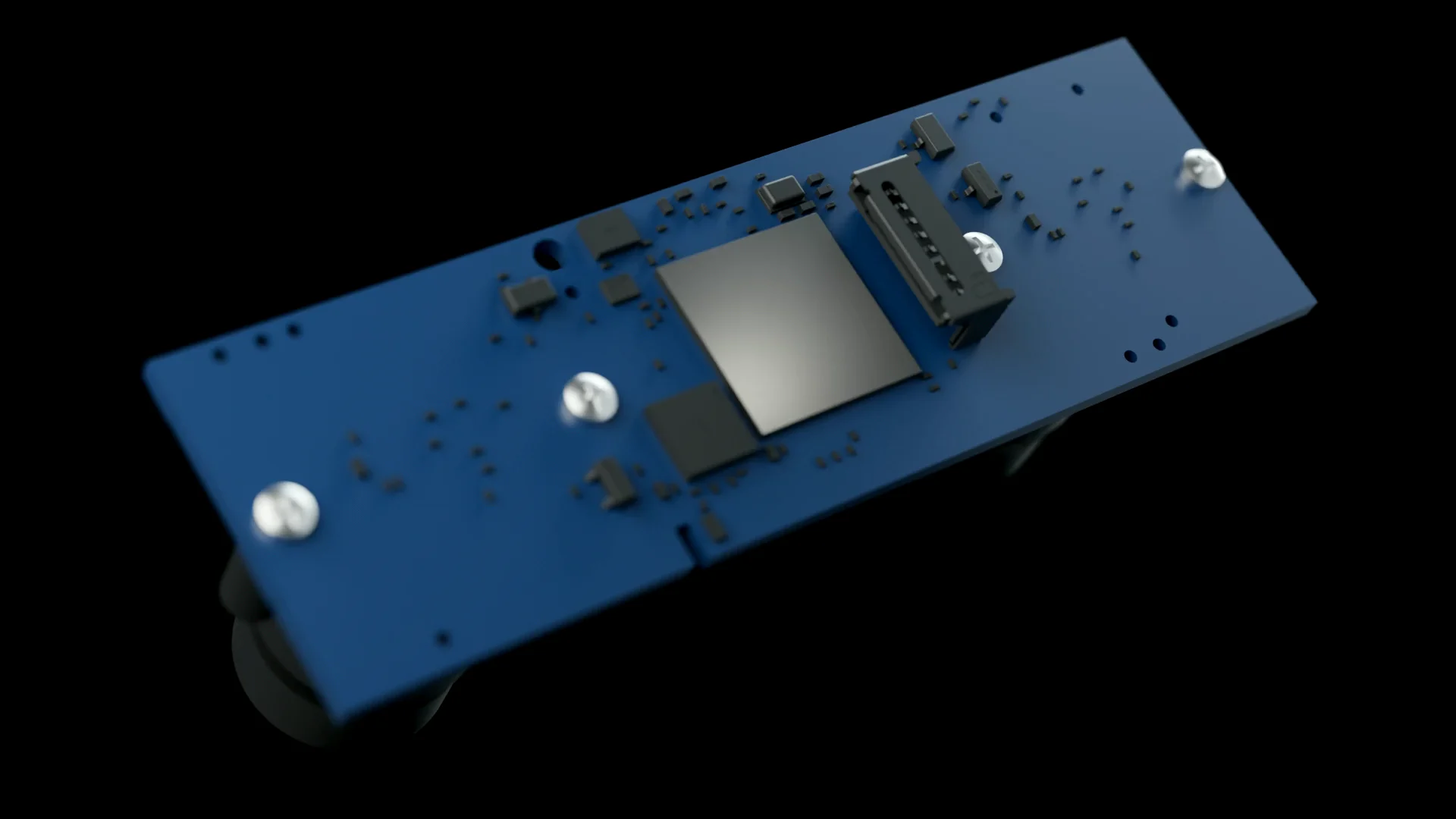
The large package at centre is the SoC where hashing and signing happen. Rendered from the board's own CAD.
How it works
Four steps. No frame leaves the board unsigned.
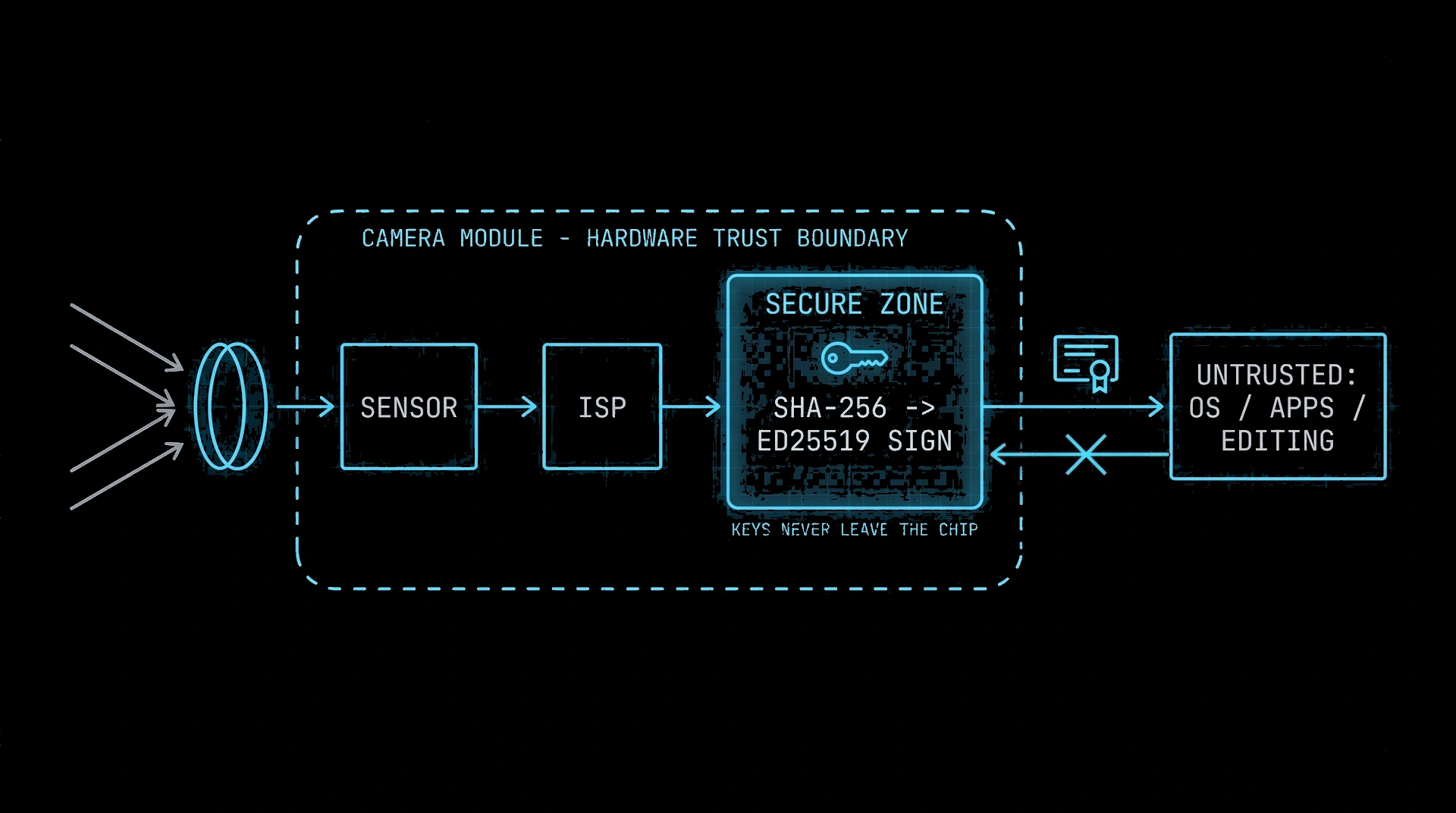
Sensor to signature: inside the trust boundary, start to finish.
Why now
California's SB 942 and the EU AI Act's Article 50 both took effect August 2, 2026. AB 853 requires embedded provenance by default from 2028. Sign at the point of capture, and the board is already compliant with what just landed, and ready for what comes next.

Three rules. One board.
Roadmap
Neither of these exists yet. They are targets, not shipped capability. We write them down so you can hold us to them later.
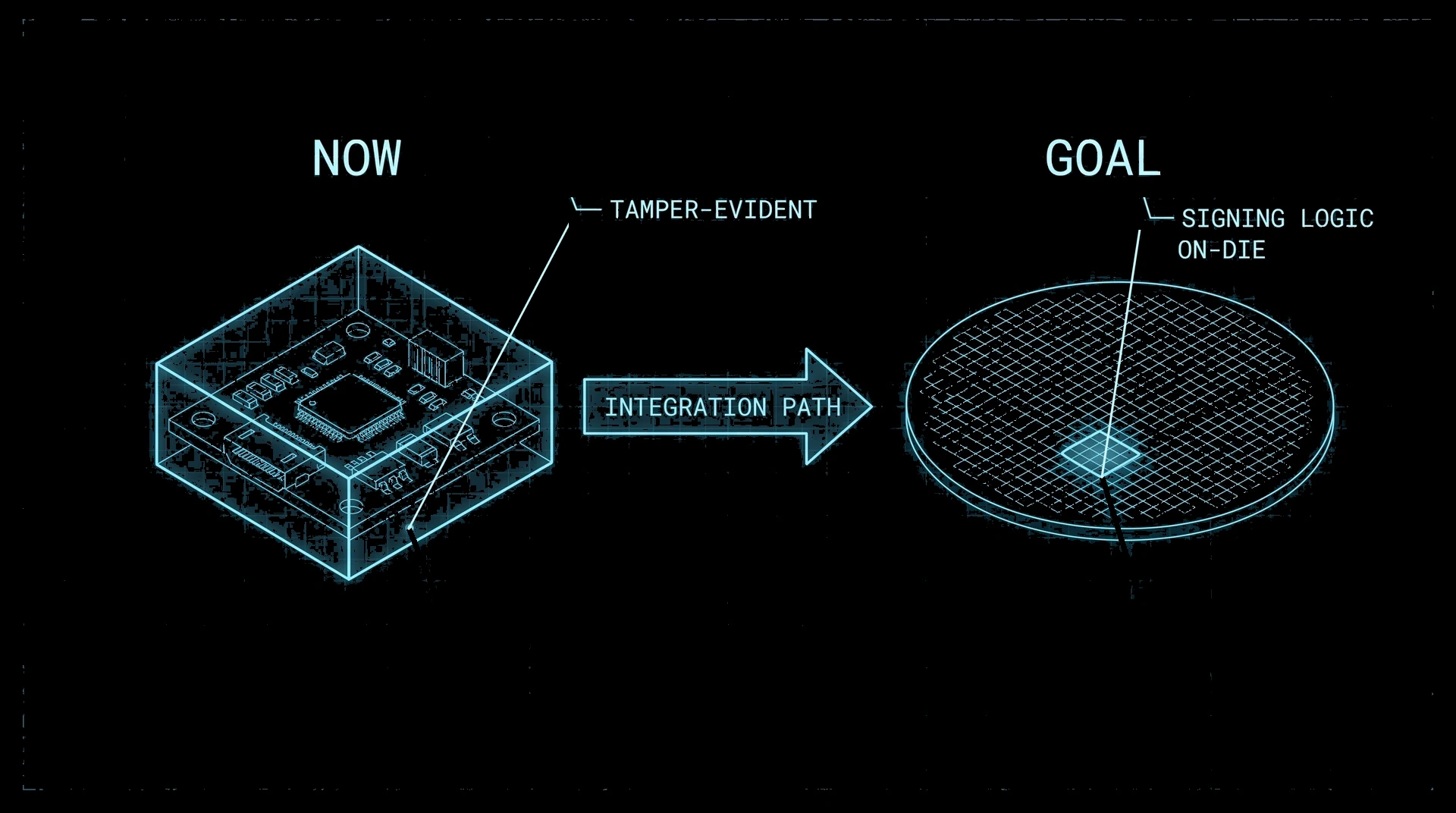
Now: a standalone module in tamper-evident resin. Goal: signing logic on the sensor die itself.
Signing on the die
Signing logic embedded directly on the image-sensor die: light to signature, in a single chip.
FIPS 140-3 + C2PA
Targeting FIPS 140-3 Level 2 certification and C2PA-compatible manifests.
What exists today: a custom PCB on commercial SoCs, and a resin-filled enclosure for tamper evidence. Nothing here is certified yet.
Signing is half of it. The other half is sync.
AnchorCam Stereo puts vision, touch, and motion on one clock. Sub-millisecond.
Last updated 3 August 2026 · mutual.solutions